


Rev. Dr. Michel Faulkner reflects on what happens when life doesn’t go as planned, and why identity matters more than outcome.
By Rev. Dr. Michel Faulkner
Most people don’t think about who they are until something in their life stops working.
As long as things are moving forward, success has a way of holding everything together. You don’t question your identity when the path is clear, when progress is steady, or when people are affirming what you’re doing. The real test comes when that forward motion is interrupted, when something breaks, or when life doesn’t go the way you expected.
That’s where a lot of people struggle, because what they thought was stable turns out to be temporary.
When I sat down with Rev. Lee Rouson, we started talking about what it really means to come back from setbacks. Not just physically, but emotionally and spiritually. People see the years in the NFL, the college success, and assume the story was always moving upward. What they don’t see are the moments where things didn’t go right and the decisions that had to be made in those moments.
Staying When It Would Have Been Easier to Leave
Lee shared a moment early in his career that could have changed everything. At 18 years old, he committed to the University of Colorado, turning down multiple major programs. Within days of signing, the program was placed on probation. Other athletes began looking for ways out, trying to find new opportunities even if it meant starting over.
He stayed.
He told me he had every reason to be frustrated, and those thoughts crossed his mind, but he made a decision not to let the situation define him. Instead of getting stuck in what went wrong, he chose to move forward with what was in front of him.
“I didn’t allow the struggle to define me,” he said. “Forgiveness was the way that I was not defined by the things I was going through.”
That kind of response doesn’t come from circumstance. It comes from something deeper. Most people don’t realize how much of their identity is tied to outcomes until those outcomes are taken away.
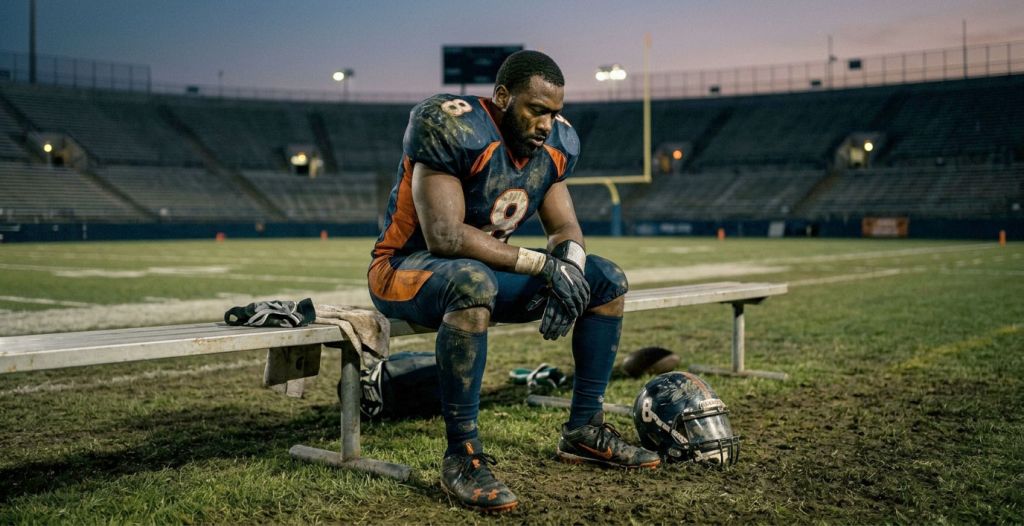
You Can’t Move Forward If You Stay Stuck Inside It
One of the things that came up in our conversation was how easy it is to become trapped by your own emotions. Anger, disappointment, frustration, all of those things feel justified in the moment. The problem is that if you stay there, they begin to define how you think and how you move.
Lee put it plainly. He said he made a decision early not to become a prisoner of those emotions. That doesn’t mean those feelings weren’t there. It means he didn’t let them take control.
I’ve had to learn that lesson myself.
There were moments in my life where I carried frustration from things that didn’t go the way I thought they should. Relationships that weren’t what I expected, situations that felt unfair, and experiences that could have left me stuck if I held onto them. At some point, I had to recognize that carrying that weight would affect everything else in my life.
I had to learn how to move forward without dragging the past with me.
Identity Has to Be Stronger Than Circumstances
There’s a reason this is difficult. When your identity is tied to performance, success, or how other people respond to you, any disruption feels like a loss of self.
That’s why setbacks hit people differently.
Some people recover and keep moving. Others struggle to regain their footing because what they were standing on wasn’t as solid as they thought.
Lee described how his understanding of faith changed that for him. He didn’t see it as something emotional or situational. He saw it as something that required action.
“I can’t feel my faith,” he said. “I believe. I don’t feel, I believe.”
That shift matters, because it separates what you do from how you feel in the moment. It allows you to act with clarity even when your emotions are unsettled.
What Carries You Forward
As we talked through all of this, one idea kept coming back. Moving forward is not about avoiding struggle. It’s about not allowing struggle to determine who you become.
That’s where forgiveness comes in, and it’s often misunderstood. People think forgiveness is about letting something go because it no longer matters. In reality, it’s about choosing not to let it control you.
It’s not weakness. It’s discipline.
And like anything else, it has to be practiced.
Lee described love in a way that connects directly to this. He said love is not something you feel first. It’s something you choose. It’s an action, not a reaction. It’s doing what is right even when you don’t feel like it.
That applies to how you treat others, and it also applies to how you move forward in your own life.
Because if you wait until you feel ready, you may never move at all.

About the Author
Rev. Dr. Michel Faulkner is a contributor to MissionWake News and co-host of Football, Family, and Faith, where conversations explore the intersection of sports, leadership, and faith.
Listen to the podcast and learn more:
https://www.goalpostsandbeyond.com