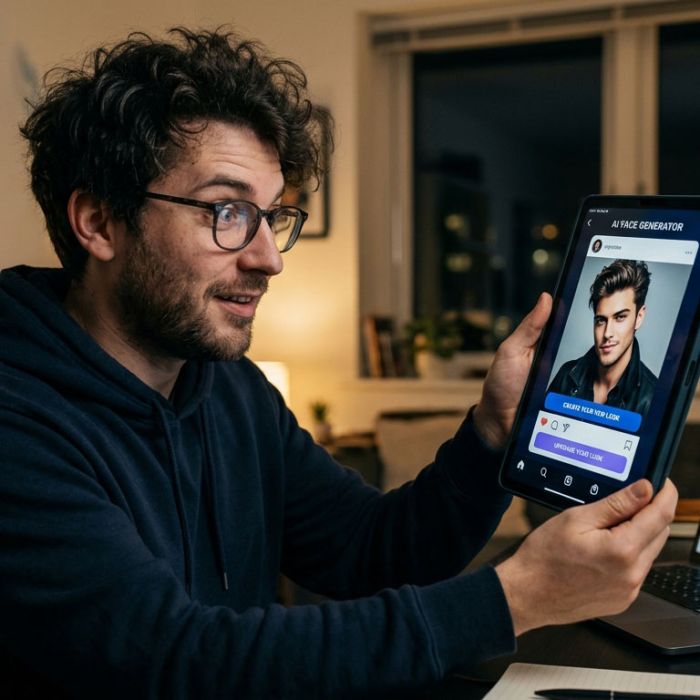



You’ve probably seen the apps by now, the ones that can change your face, adjust your features, age you, reshape you, or turn you into a completely different version of yourself. With a few taps, you can look like someone else entirely, a version that feels more refined, more controlled, or more aligned with how you would prefer to be seen.
At one level, it feels harmless, even creative, but if you step back for a moment, it raises a question that’s easy to overlook: what happens when the version of ourselves we create starts to feel more appealing than the one we’re actually living? Not just something we experiment with, but something we begin to prefer, because that’s where the shift begins. It’s not when we create something different, but when we start to lean on it, when it becomes easier to present something constructed than to engage with what is actually true.
When the Version We Create Feels More Real
And if we’re honest, that doesn’t stay on the surface. It begins to shape how we see ourselves. We carry a version of ourselves that feels familiar, not necessarily because it’s accurate, but because we’ve reinforced it long enough that it feels normal. It becomes the reference point we operate from, even if we’ve never really examined whether it’s true.
That’s where something subtle begins to happen, because truth doesn’t change, but our relationship to it does. We hear phrases like “this is my truth,” and at first they sound like honesty, but underneath that language is a quiet adjustment. Truth is no longer something we discover; it becomes something we shape around what we’re willing to accept.
When Truth Becomes Something We Shape
And if we’re honest, that’s appealing, because shaping truth gives us control. It allows us to keep certain parts of our identity in place without having to question them, and it lets us hold onto interpretations of our lives that feel manageable, even if they aren’t entirely accurate. Once something feels manageable, it’s rarely challenged, even when it should be.
That’s where this moves from culture into something much more personal, because whether we realize it or not, we are constantly building a belief system. Every experience, every message, and every interpretation contributes to how we see ourselves, how we understand others, and how we make decisions.
And in a world where truth is constantly blurred, that belief system is not built entirely on truth. Some of it is, and some of it isn’t, but unless we are intentionally separating the two, they become intertwined.
When Belief Becomes Identity
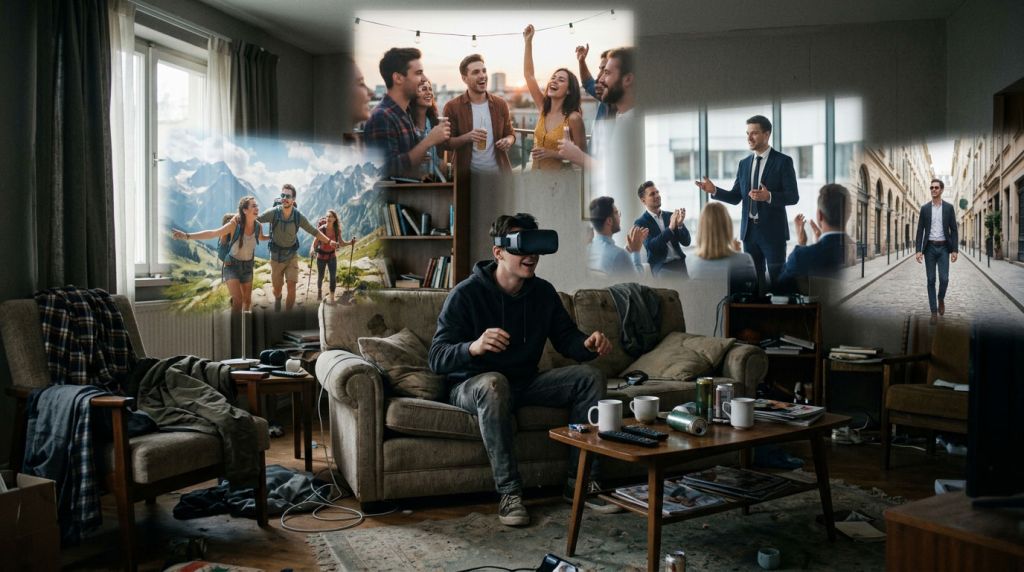
That’s where things get dangerous, because once something becomes part of our belief system, it doesn’t stay as information. It becomes identity, and once it becomes identity, it becomes harder to question. Not because we can’t see it, but because questioning it would require us to rethink something we’ve already built our lives on.
That’s why truth doesn’t always feel like clarity at first. Sometimes it feels like disruption, because if something we’ve built around isn’t true, then facing that truth doesn’t just adjust our thinking, it reshapes us.
Scripture describes this tension clearly. In the first chapter of the Epistle to the Romans, it speaks about exchanging truth for something else, not because truth isn’t available, but because something else feels easier to live with. That exchange doesn’t usually happen all at once; it happens gradually, in what we ignore, in what we reinforce, and in what we choose to keep because it fits what we’ve already accepted.
What We Build Our Lives On
And over time, those choices begin to shape everything, because what we believe about ourselves determines how we move, the risks we take or avoid, the relationships we build or withdraw from, and the direction our lives begin to take. If we follow that far enough, it becomes clear that our lives are not just shaped by what happens to us, but by how we interpret what happens to us, and those interpretations come from what we believe is true.
Which means if something at the foundation isn’t accurate, everything built on top of it will be affected.
That’s why this matters, because this isn’t just happening out there, it’s happening within us.
The Question That Remains
Which is why the question still stands. In the Gospel of Matthew, Jesus asks, “Who do you say that I am?” and behind that question is another one we don’t always ask directly: who do we say that we are?
Because if we’re honest, most of us are living from an answer we’ve never fully examined, and if that answer isn’t entirely true, it won’t just stay theoretical, it will shape everything.
So the question isn’t just what is truth. It’s this: what in our lives right now is built on something that isn’t actually true? Because once we see that clearly, something shifts—not because everything changes at once, but because we can no longer pretend it isn’t there, and that’s where real transformation begins.
——————
About the Author
Mick Richards is a media missionary and founder of MissionWake, focused on telling real stories that lead to real-world impact.
For more information, visit: mickrichards.com








 By Mick Richards