

By Mick Richards
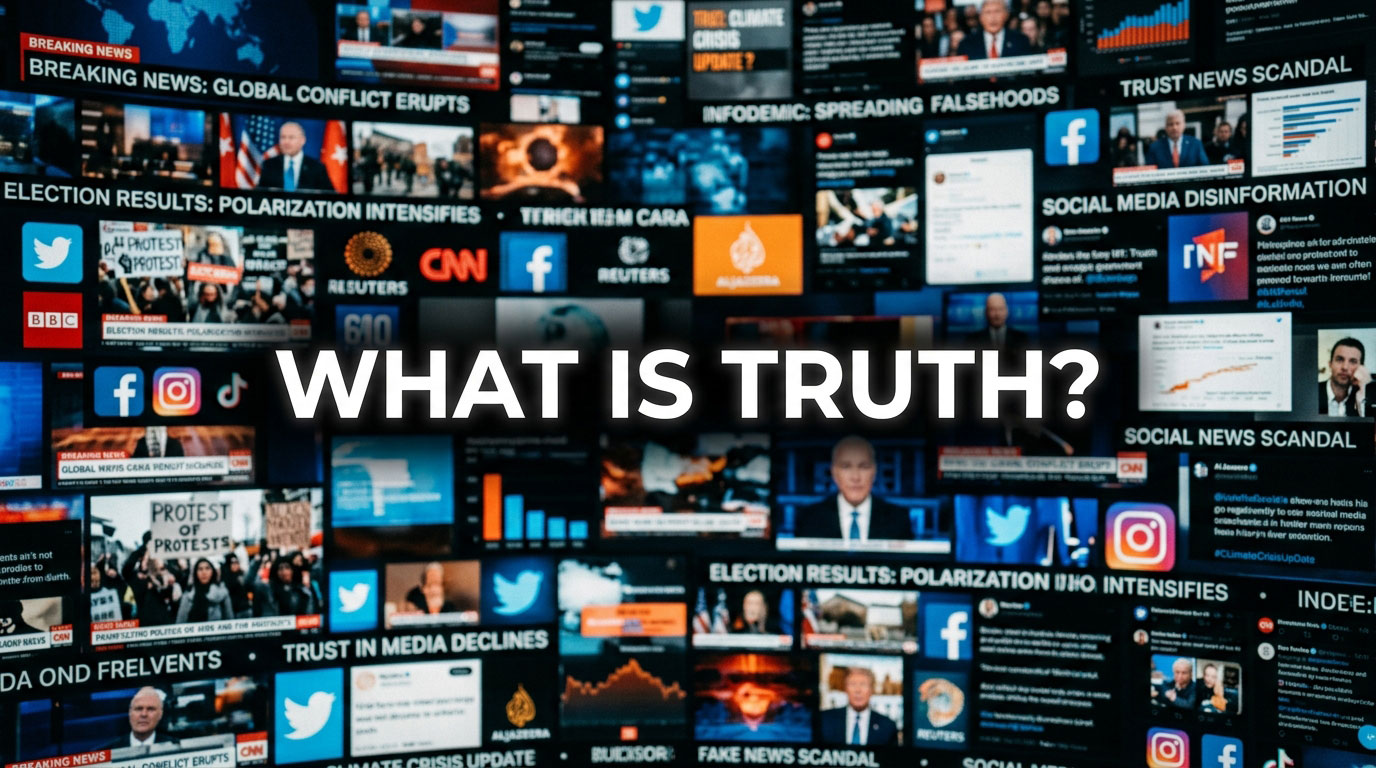
Scroll through any news feed right now and it shows up immediately. One headline says one thing, another reframes it, and a third contradicts both. People publish, comment, and share constantly, often without accountability, without verification, and without much concern for whether what’s being said is actually true.
After a while, something shifts. Not because truth stops mattering, but because the effort required to keep up becomes overwhelming. The volume is too high, the signals are too mixed, and the process of sorting through it all becomes exhausting. Over time, instead of examining everything carefully, we begin to accept what feels close enough to true.
When We Stop Examining What We Hear
That shift does not stay external. It starts shaping how we process things internally. Constant exposure to conflicting and unchecked information begins to influence how we interpret our own lives. What starts as confusion in the world eventually becomes confusion within us.
We don’t just lose clarity about what’s happening around us. We begin to lose clarity about what’s true within us. Eventually, we stop asking the question altogether, or we ask it in a different way.
“What is truth?”
It is the same question Pontius Pilate asked when he stood in front of Jesus Christ. It was not asked from a place of deep curiosity. It came from fatigue, from living in a system where truth was constantly debated, reshaped, and influenced by power. That kind of environment should feel familiar, because we are living in one now.
When Truth Becomes What Feels Convenient
When we remain in that kind of environment long enough, it changes how we approach truth. Instead of searching for it carefully, we begin to accept what is convenient, what fits, and what requires the least amount of effort to maintain. That shift does not just affect what we believe about the world. It affects what we believe about ourselves.
Whether we realize it or not, we are always forming a belief system. Every experience, every message, and every interpretation contributes to how we see ourselves, how we understand others, and how we make decisions. In a culture where truth is constantly blurred, that belief system is not built entirely on truth. Some of it is, and some of it is not. Unless we are intentional about separating the two, they begin to merge.

When Truth Challenges What We’ve Built
That is where things become difficult. Once something becomes part of our belief system, it does not remain as information. It becomes identity. And once it becomes identity, it becomes much harder to question. Not because we cannot see it, but because questioning it would require us to reconsider something we have already built our lives on.
That is why truth does not always feel like clarity. Sometimes it feels like disruption. It forces us to separate what is actually true from what we have grown comfortable believing is true. That process does not happen automatically. It requires attention, intentionality, and a willingness to care about truth again.
Scripture describes transformation as the renewing of the mind in the Roman chapter 12. That renewal does not happen passively. It happens when we begin to actively separate what is true from what is not. The work is not simply finding truth in a world full of information. The work is learning how to recognize it, hold onto it, and remove everything that has been layered on top of it.
If we do not do that, we will build parts of our lives on things that are not true. Those things will shape our decisions, our relationships, and the direction our lives move. That means this is not only a cultural issue. It is a personal one.
At some point, if we are serious about transformation, we have to ask a more direct question. Not what is happening out there, but what is happening within us. What in our lives right now is built on something that is not actually true?
Because that is where the real work begins.
—————
About the Author
Mick Richards is a media missionary and founder of MissionWake, focused on telling real stories that lead to real-world impact.
For more information, visit: mickrichards.com







 By Mick Richards